 |
| Jean-Paul Sartre (1905-1980) |
Be employable, study philosophy!
Vancouver journalist Shannon Rupp, "Be employable, study philosophy" (Salon, July 1, 2013): "I tell people the most useful classes I took were all in philosophy. Yes, the course of study that has long been denigrated as frivolous and useless in the job market has been the part of my education that I lean on again and again. For work and everything else.... 'Jobs change. But if you teach students to think clearly first, they can do whatever else they want to do'.” Read the rest of Shannon Rupp's article. Then come to Providence University College and take some philosophy courses! (Look for philosophy courses in Humanities.)
On Jesus, Objective Truth, Etc.
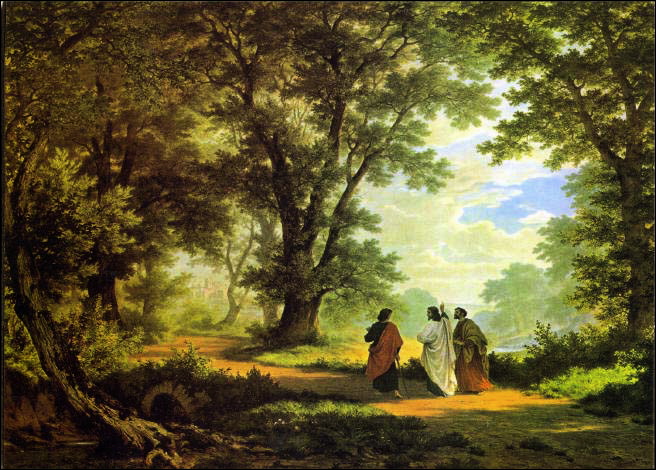
Here is a fine article from the philosophers over at Tyndale University College:
Jesus and Objective Truth
And here are some articles from the philosopher over at Providence University College:
What is truth?
Pragmatic theory of truth ... is false
Nietzsche's skepticism
Happy spring-summer reading!
Tyndale Philosophy Blog

Tyndale University College (Toronto) has a new blog that might be of interest to Providence University College students taking philosophy: Every Thought Captive: Official Blog of Tyndale UC Philosophy Department.
Easter
Easter is the celebration of Jesus' resurrection. But did Jesus actually rise from the dead? Here's a 9 minute portion of a debate between two important philosophers, William Lane Craig (yes) and Alex Rosenberg (no):
For further reading: Easter and philosophy, Believing Christmas because of Easter, and Did Easter Happen?
Happy Easter!
Thinking about Wealth, Poverty, and Free Enterprise

Does free enterprise lead to an ugly consumerist culture?
Philosopher Jay W. Richards attempts to answer this question in Part 7 of "Eight Most Popular Myths about Wealth, Poverty, and Free Enterprise." Food for thought.
Jay W. Richards is (among other things) a research fellow at the Acton Institute.
Faith Beyond Belief
Philosophy Foosball Dinner -- POSTPONED
PLEASE NOTE: Philosophy Foosball Club Dinner has been postponed. A Memorial Service has been planned for the late and beloved Dr. Henry Schellenberg and will occur in Winnipeg at Westminster Church, Friday, March 1, 7:30 p.m. A new date for PFC Dinner is to be determined and will be announced soon.
A Night of Quining and Dining
Winter 2013 Philosophy Foosball Dinner will occur at Dr. and Mrs. VDB's place on Friday, March 1st at 6:15 p.m. After dinner we will enjoy presentations on the philosophy of Willard van Orman Quine (VOQ?). After some serious philosophical discussion we will play some serious games of skill (foosball on the mini-table and heart-pounding Crokinole) plus we will listen to some serious musical talent (from the one and only Manny Coon and perhaps others who happen to bring along a musical instrument).
For those planning to attend, please RSVP by email to VDB by noon on Wednesday, February 27 at the latest. (If you've already RSVP'd via Facebook, that's sufficient.) If you need directions, contact VDB.
Hope to see you all there!
VDB
P.S. All students interested in philosophy, whether current Providence students or not, are welcome.
P.P.S. Here is VDB practicing for Crokinole rematch with Rob Horsley.
Plantinga!

Missio Dei

Gospel. Justice. Setting captives free. Good food for philosophical thought—and action. Come to Missio Dei.
No Secrets
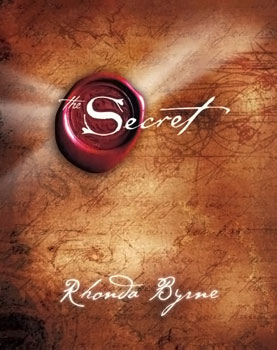
Sometimes a secret should be exposed, not kept. Here are some clarifications and criticisms of the new gnosticism found in Rhonda Byrne's The Secret from Mark Earley and John Stackhouse, Jr. Good food for philosophical thought.
Philosophical Idol?
 |
| David Hume (1711-1776) |
Here's an interesting piece from The Chronicle of Higher Education: "The Philosophers That Philosophers Like Best".
A Change Is Gonna Come
The title says it all. Christmas has come and gone again this year, a rather sorrowful Christmas this year for many as yet another school shooting makes headlines across the world. Creation cries out in unison with its creator and saviour as he makes his sounds from a manger.
Story vs. story

Friday Philosophy Lunch Cancelled

Evolving in Monkey Town

This Friday PFC will be discussing this book at lunch so if you haven't read it yet, it might be a good idea to do so, it's a pretty easy and fun read.
To entice you to read this book and to foster some discussion, here is a brief review:
Evolution, a term loaded with a lot of rhetorical and emotional baggage in the religious culture of North America. As anyone versed in van der Breggenian philosophy ought to know, words can have multiple senses, and this proves true for the word "evolution". Evolution can refer to the Darwinian theory, or to simply change over time (there are many other senses, but for the sake of brevity I have only included two). Evolving in Monkey Town is the autobiographical account of one girl's journey growing up in a uber fundamentalist town and her coming to grips with her faith.
Rachel Held Evans grew up as the keenest apologist for her faith to be found. When she begins to realize that some of her answers just don't hold up against the emotional onslaught of dealing with real people, she begins to question her faith. Her journey reminds me much of Psalm 27, knows God, experiences some upheaval and disorientation and then is reoriented in her faith, now with a heart knowledge to accompany her "answers".
For the most part, I felt like I could identify well with the character. While my upbringing was not nearly as fundamentalist as hers, there are points of contact that hit home. For any who have struggled with doubts as they wrestled with their faith, they will find a familiar story here. This book is rhetorically powerful and convincing because of its emotional narrative. Where logical connections are lacking, the force of remembered experience evokes sympathy in the reader as one is drawn into the text.
My one major critique is that Evans seemed to force her faith to conform to her conscience. Somehow she knew that certain things were really right and really wrong, and where her theology clashed with that, she needed to do some work. The question that remains begging to be asked is of course, how does she know that her conscience was speaking truth. It would seem to me that she moved along a good moral direction throughout the story, but where did the standards of right and wrong come from that prompted her to deal with the inconsistencies of her faith?
I appreciated the emphasis that Evans put on the asking of questions over the defending of answers. There are a lot of things about God, that perhaps, it is better we never quite figure out. That being said, we shouldn't through out the notion of any epistemic certainty. We are a long way, each of us, from having the whole truth, but as VDB would say, "we do know some things, and that I think is significant".
Push Select
Hey PFCers!
Take some time to check out this wonderful new site, brought to you by many former members of this prestigious club.

Take some time to check out this wonderful new site, brought to you by many former members of this prestigious club.

(Picture of Soren Kierkegaard playing some Nintendo)
Introducing Push Select. A website dedicated to the study of philosophy and video games, with the occasional theological comment and some nifty artwork. Check it out here.
Friday's Discussion
This past Friday, the PFC had a very interesting conversation about the importance of the historical veracity of the life of Jesus Christ. I feel we reached a good synthesis of ideas which I here make an attempt to lay out.
 The event of the incarnation and atonement are historical incidents. Jesus of Nazareth, according to the record (primarily the canonical Gospels), was a real man who lived, died, came back to life and ascended into heaven. These actions are significant whether we know about them or not (VDB's observation). Now, if nobody had recorded these actions, if they in fact had happened, that would still be significant (VDB). The fact remains however that these events were recognized for their significance and remembered by a community (RT's observation). If the events had not been recognized for their significance, not recorded, and subsequently not remembered - i.e., the Church did not start - this would cast doubt on the crucial claim of the man Jesus (RT, see note below regarding the crucial claim of Christ). This doubt, however, would not be sufficient for dismissing the reality of Christ's actions; the observation and recognition of an event have no bearing on whether an event actually happened (VDB). Now, the fact that the Church did indeed recognize and preserve the history of Jesus is good evidence to suggest that, in fact, it did happen, and that the event did have the meaning that it is alleged to have. The effect that Christ claimed to come to enact has indeed happened (i.e., his claim to be an atoning sacrifice, seeing the fruits of that sacrifice in a community that responded to his atoning work), supporting favourably the claims made that what he did in his life, death, and resurrection really mattered.
The theological significance of Christ has no foundation without the actual real events (VDB). But it seems significant that we know about the event, and the significance of the event due to the work of the Church, that community that continues to embody Christ and is made up of individuals who have been radically affected by the event of Christ (RT). The event is not logically contingent on the change it affects, but it would be reasonable to doubt the veracity of the claims surrounding the event if no change was affected. (Note: My understanding is that Christ's claim is that he is God which I understand as being closely accompanied by the claim that he would, in the words of Isaiah, "set the captives free" and build his Church. His primary claim would be suspect if the secondary claims that are closely associated with it did not occur. At best I would suggest a suspension of belief because of our inability to know; luckily, there is evidence that those secondary claims occurred, allowing for belief in the primary claim.)
Is it not wonderful that there was a community that recognized that Jesus truly was the son of God and recorded the historical events of his life, alerting us to the fact that he indeed did matter? Now let us gaze upon the Risen Christ in thanksgiving for the work of his life, and the continued work of his body the Church.

The theological significance of Christ has no foundation without the actual real events (VDB). But it seems significant that we know about the event, and the significance of the event due to the work of the Church, that community that continues to embody Christ and is made up of individuals who have been radically affected by the event of Christ (RT). The event is not logically contingent on the change it affects, but it would be reasonable to doubt the veracity of the claims surrounding the event if no change was affected. (Note: My understanding is that Christ's claim is that he is God which I understand as being closely accompanied by the claim that he would, in the words of Isaiah, "set the captives free" and build his Church. His primary claim would be suspect if the secondary claims that are closely associated with it did not occur. At best I would suggest a suspension of belief because of our inability to know; luckily, there is evidence that those secondary claims occurred, allowing for belief in the primary claim.)
Is it not wonderful that there was a community that recognized that Jesus truly was the son of God and recorded the historical events of his life, alerting us to the fact that he indeed did matter? Now let us gaze upon the Risen Christ in thanksgiving for the work of his life, and the continued work of his body the Church.

Nothing
Today on Quirks and Quarks Bob McDonald interviewed Dr. Lawrence Krauss, author of A Universe from Nothing. Krauss argues that Nothing is actually a quantity that is radically different than conceived by classical philosophy. He then proceeds to explain that Nothing, i.e., a vacuum devoid of all particles, actually has mass that can be measured. Diving into the murky waters of quantum physics he discusses the nature of gravity and how it has the ability to create things from nothing.
As I listened I was fascinated by his account, however I found that I disagreed with his description of Nothing. He was saying that Nothing was not actually no-thing but rather Something. Having a raging sea of energy, or so-called "Dark Matter" is not Nothing, there seems to be yet another language game at work here, a subtle redefining of the word. Krauss uses the word Nothing to refer to a state that is in reality something, his science is interesting, his reasoning ics flawed. Krauss, I believe, has made a category mistake in his explanation of Nothing.
Throughout this interview he repeatedly bashes creationists and religious believers. However he takes it a step further by even rejecting philosophical explanations. This shows an example of a scientist overstepping his bounds (for more on the limits of Science, see Dr. van der Breggen's class on the Philosophy of Science). Regardless of one's views on the origins of the cosmos, it is important that one thinks critically about the nature of Nothing, I would caution against those who define Nothing as Something. Give the interview a listen, and think critically!
As I listened I was fascinated by his account, however I found that I disagreed with his description of Nothing. He was saying that Nothing was not actually no-thing but rather Something. Having a raging sea of energy, or so-called "Dark Matter" is not Nothing, there seems to be yet another language game at work here, a subtle redefining of the word. Krauss uses the word Nothing to refer to a state that is in reality something, his science is interesting, his reasoning ics flawed. Krauss, I believe, has made a category mistake in his explanation of Nothing.
Throughout this interview he repeatedly bashes creationists and religious believers. However he takes it a step further by even rejecting philosophical explanations. This shows an example of a scientist overstepping his bounds (for more on the limits of Science, see Dr. van der Breggen's class on the Philosophy of Science). Regardless of one's views on the origins of the cosmos, it is important that one thinks critically about the nature of Nothing, I would caution against those who define Nothing as Something. Give the interview a listen, and think critically!
Subscribe to:
Posts (Atom)